

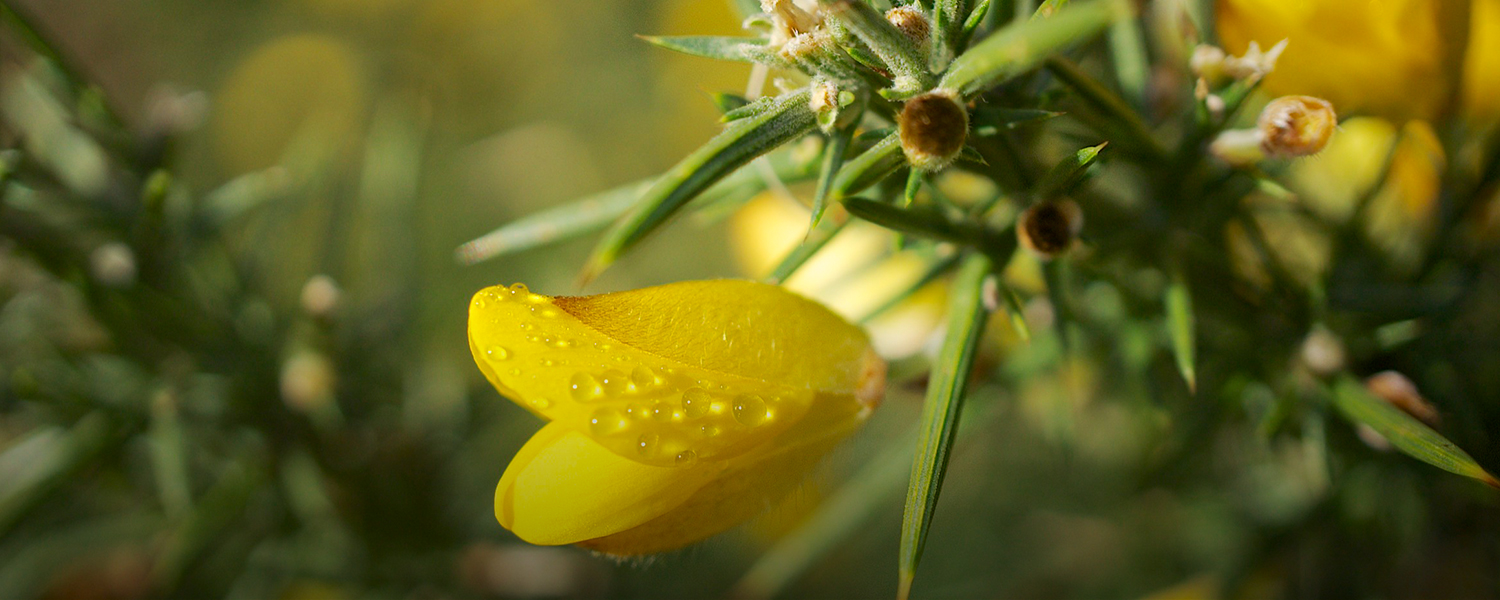
Weeds
Invasive Weeds in Marin County
In Marin and across the country, invasive weeds pose a threat to farming, ranching and healthy ecosystems. That’s why weed management is a cornerstone of MALT’s Stewardship Program.
This page offers an overview of the economic and environmental costs of rangeland weeds, information on how to manage invasive plants on your land, and resources from MALT and other sources to help landowners stay on top of the threat.
Jump to:
Marin County’s worst agricultural weeds »
Economic Costs
Every year, invasive species cost American farmers and ranchers $33 billioni. When weeds move into pastureland, they can overtake the plants that foraging animals rely on, reducing grazing capacity by more than 50% in some cases. In Marin County each year, pastures that are heavily infested can cost producers up $225 per acre in lost forage production alone.
Weeds pose a particular challenge for certified organic producers, who are not permitted to use chemical herbicides on their fields and pastures.
Environmental Costs
Invasive species are responsible for environmental damages and losses adding up to more than $138 billion per year in the United States.
Non-native plant species can outcompete crops and grassland species that are beneficial for foraging cattle and wildlife alike. Some invasive species demand huge quantities of water that would otherwise be available for wildlife, native plants, agriculture or drinking water. Others increase the risk of hotter, more destructive wildfires, and can even clog creeks and cause flooding.
i. Pimentel, et al, 1999: Environmental and Economic Costs Associated with Non-Indigenous Species in the United States
Worst Offenders
Of all the invasive species present on Marin County rangeland, we have highlighted three that are currently of great concern to ranchers and conservationists: woolly distaff thistle, purple star thistle and gorse. They share the following characteristics:
- Ability to establish and spread rapidly
- Formation of dense monocultures, crowding out native plants and desirable forage species, which reduces biodiversity and displaces valuable habitat
- Spiny and unpalatable to cattle, sheep, most wildlife and insects
- Deep roots use up moisture within the soil and make them difficult to control once established
From backyard gardeners to ranchers tending a thousand-acre spread, Marin residents who care for the land should be able to identify these three species. The chart below is a good place to start, or see Additional Resources at the bottom of the page to learn more.
What to do if you discover these weeds growing on your land? See our Tips on Managing Weeds below.
Woolly distaff thistle(Carthamas lanatus)
|
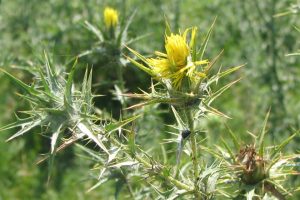 |
Purple star thistle(Centaurea calcitrapa)
|
 |
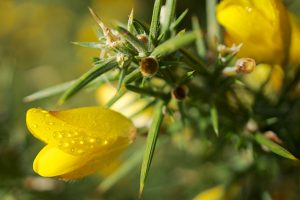
Gorse(Ulex eruopaeus)
|
 |
Tips: Managing Weeds on Your Land
Weed management varies with the species, site, season and severity of the infestation. But there are common strategies that can be used to manage weeds on rangeland or wild land, no matter the place or plant.
1. Prevention
Seeds can hitch rides in infested hay bales, soil, animal fur, hooves, manure, waterways, vehicles, roads, clothing and shoes, to name just a few. Take steps to avoid accidentally importing weed seeds.
2. Early detection and rapid response (EDRR)
Catching weeds early offers the best chance for eradication with minimal cost.
3. Control
Control becomes necessary once weeds have become established and widespread. Eradication becomes unlikely, control efforts become more costly, and a long-term management plan is required.
4. Restoration
Restoration is expensive and typically requires outside help and expertise. MALT’s Stewardship Assistance Program has helped many MALT landowners cover the costs of critical restoration projects to control weeds on their land.
Long-Term Management Plans
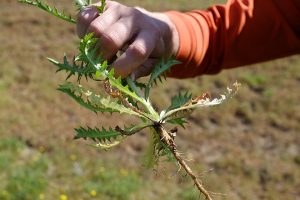 Many of Marin County’s weeds arrived in California over 150 years ago and have become well established. That’s why a long-term strategic weed management plan with clearly stated goals is critical to successfully controlling weeds on working land. This plan should describe the best methods to eliminate weeds, improve the invaded plant community and prevent reinvasion.
MALT’s stewardship staff offers landowners one-on-one technical assistance regarding best practices for weed management on their ranches. We are also working with partners to develop a woolly distaff thistle management plan that will help provide landowners a clear route to getting these invasive plants under control.
Contact MALT stewardship staff »
Additional Resources
For more information on invasive plants, control techniques and developing a weed management plan, see these links:
Donate now and protect Marin farmland forever.
Donate now and protect
Marin farmland forever.

© 2008-2018 Marin Agricultural Land Trust. All Rights Reserved.

© 2008-2018 Marin Agricultural Land Trust. All Rights Reserved.