

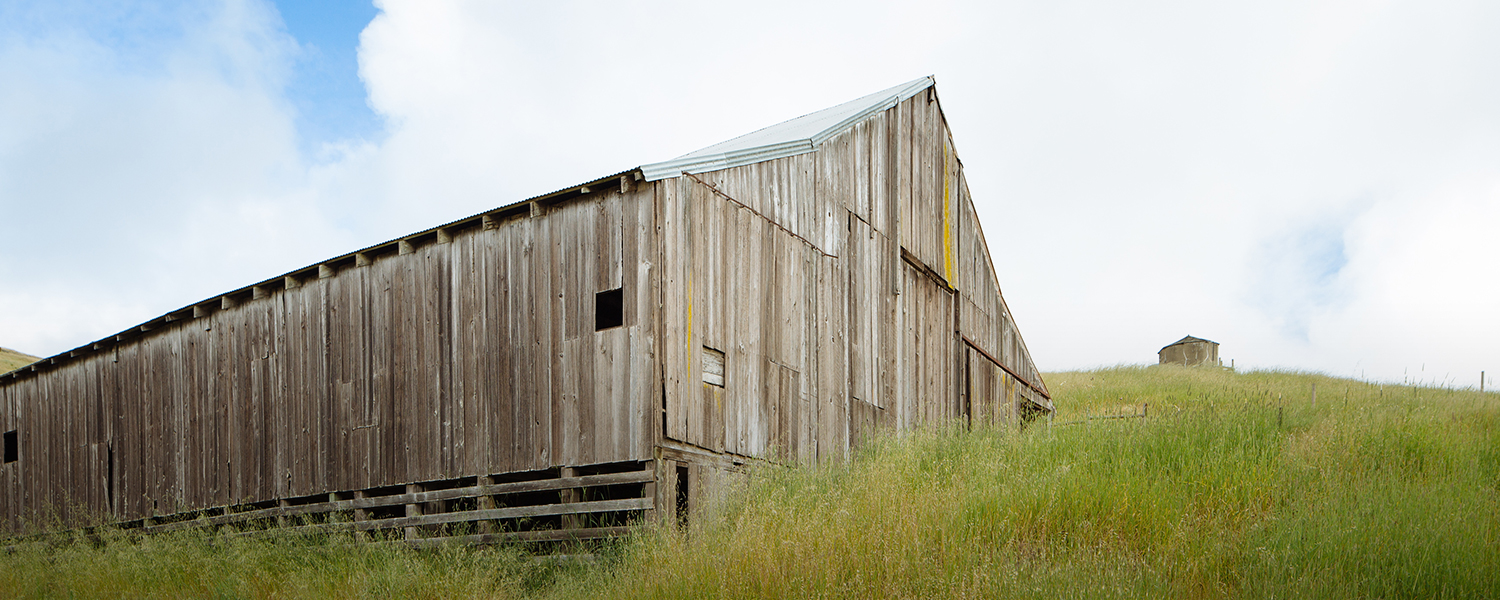
How We Protect Farmland
MALT buys the development rights on Marin County farmland using a tool called an agricultural conservation easement, protecting the land forever. Our newer easements include Mandatory Agricultural Use provisions, which ensure that the land will continue to be actively farmed.
What is an Agricultural Conservation Easement?
A MALT agricultural conservation easement is a legal agreement between MALT and a landowner that prohibits:
- Non-agricultural residential and commercial development
- Subdivision
- Uses or practices that are detrimental to sustainable agriculture.
MALT easements are perpetual: they remain in effect on the land regardless of change in ownership.
By restricting non-agricultural uses, the easement lowers the value of the land. MALT purchases easements from landowners to compensate for the loss of value. Once the sale of an easement is final, MALT extinguishes the development rights on protected farmland. We do not sell or transfer development rights to another area of the county. The land remains in private ownership.
MALT has been purchasing conservation easements from farmers and ranchers in Marin County since 1983. For more than three decades, we’ve worked to improve our easements to address changing threats to Marin’s agricultural land, and in response to specific conditions on each protected property.
New Easements
Interested in selling a conservation easement to MALT? Please fill out an application and return it to Stephanie Tavares-Buhler, Easement Project Manager, at (415) 663-1158 ext. 302, or sbuhler(at)malt.org.
Mandatory Agricultural Use Program
MALT’s Mandatory Agricultural Use (MAU) program is designed to ensure that the land remains in productive commercial agriculture forever, regardless of change in ownership. MALT has included MAU provisions in all new easements since 2011. In 2014, MALT began offering compensation to landowers who voluntarily agree to amend their older easements to include a Mandatory Agricultural Use provision.
MALT’s MAU program guards against the growing threat of estate development on Marin’s scenic ranches. New landowners, who may not need the land to turn a profit, may farm it only lightly or take it out of production entirely. As we know, every farm that is lost strikes a blow to our region’s agricultural economy.
Since the MAU lowers the value of the land, landowners are compensated for including this provision in their easements.
Apply to Add MAU
MALT landowners: if you’re interested in adding Mandatory Agricultural Use to your existing MALT easement, please fill out an application and return it to Stephanie Tavares-Buhler, Easement Project Manager, at (415) 663-1158 ext. 302, or sbuhler(at)malt.org.
“MALT led the way in creating land permanence for farms in the early 1980s, and with the MAU program, we’re once again on the leading edge by providing a means of achieving agricultural permanence as well. This means that Marin farmers can trust that their land will be protected from development from now on, and that it will continue to be a vital part of this community’s rich agricultural heritage forever.”
– Jamison Watts, MALT Executive Director
Tax and Financial Overview
Protecting a ranch with a conservation easement may result in property, estate and/or capital gains tax savings for the landowner.
Property Tax
If a ranch is not subject to a Williamson Act contract, a MALT easement may lower the property tax burden on the property. Property tax assessments are based on the land’s fair market value; placing a conservation easement on the land may reduce this value.
Estate Tax
Many landowners come to MALT seeking a conservation easement on their land in order to ensure that their children or grandchildren can continue to farm and ranch the land as their forebears did. Estate taxes may lead to the division, sale, and development of family-owned farms and ranches, even when the next generation would prefer to keep these lands intact. Selling or donating a conservation easement to MALT may help reduce this tax burden. Under Internal Revenue Code section 2055(f)i, property that has been protected with a qualified conservation easement is valued for estate tax purposes as “restricted,” rather than at its higher “unrestricted” value. This may result in an estate tax exclusion of up to 40 percent of the easement-encumbered value of land. (Internal Revenue Code, § 2031(c)ii.) That exclusion is capped at $500,000 and is further reduced if the easement reduced the land’s value by less than 30 percent at the time of the contribution.
Capital Gains Tax
The sale of an easement to MALT is a taxable transaction. The money a landowner receives for the sale of a conservation easement is usually taxed as a capital gain. In some cases, if that money is properly re-invested in another ranch or other investment or income-producing property, the rancher may be able to defer these capital gain taxes through a 1031 exchange. (Internal Revenue Code, §1031iii. ) A rancher also may be able to offset the capital gains tax on the sale of an easement by making a charitable donation of a portion of the value of the easement, called a bargain sale transaction.
Landowners considering the sale or donation of a conservation easement are strongly urged to consult qualified and experienced legal and tax advisors.
i. 26 U.S.C., § 2055(f)
ii. 26 U.S.C., § 2031(c)
iii. 26 U.S.C., §1031
Additional Resources
Every MALT easement is tailored to the specific property it covers. If your property is currently protected by a MALT easement and you have questions about your easement, please contact Jeff Stump, Director of Conservation, at (415) 663-1158 ext. 313, or jstump(at)malt.org. If you are planning changes to your ranch or operation, please contact Jim Jensen, Stewardship Manager, at (415) 663-1158 ext. 320, or jjensen(at)malt.org.
MALT new easement application (PDF) »
Donate now and protect Marin farmland forever.
Donate now and protect
Marin farmland forever.

© 2008-2018 Marin Agricultural Land Trust. All Rights Reserved.

© 2008-2018 Marin Agricultural Land Trust. All Rights Reserved.